










By Umar Sani Daura

The military takeover in Guinea-Bissau last week, which deposed President Umaro Sissoco Embaló, serves as another ominous sign of the deep fragility of democracy across the West African region. Occurring just days after the nation went to the polls, this trend highlights a dangerous nexus between political manipulation, economic stress, and military intervention that regional leaders, especially Nigeria’s President Bola Tinubu, must urgently address.
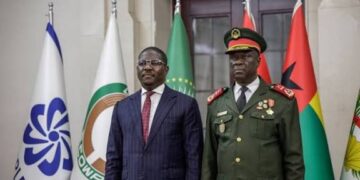
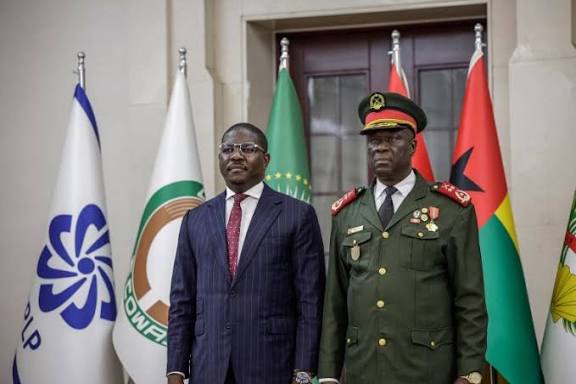
The military intervention in Guinea Bisau began on November 26, 2025, just one day before the official results of the presidential election were scheduled to be announced. A group of officers, styling themselves as the High Military Command for the Restoration of National Security and Public Order, declared they had seized “total control” of the country.

The reasons articulated by the coup plotters centered on preventing chaos and political malfeasance. They claimed their actions were necessary to halt an “ongoing plan” orchestrated by political figures and other foreign actors, including a “well-known drug lord,” aimed at manipulating electoral results and destabilizing the nation. This rationale directly points to a breakdown of trust in civilian political institutions and the judicial process.
The dramatic events unfolded while international election observers were still on the ground. Notably, former Nigerian President Goodluck Jonathan, who was leading the West African Elders Forum (WAEF) Election Observation Mission.
The turmoil in Guinea-Bissau is not an isolated incident; it follows a distressing pattern that has seen multiple military takeovers across Africa in recent years, forming what analysts now refer to as the “Coup Belt.”
Since 2020, countries like Mali (2020 and 2021), Guinea (2021), Burkina Faso (2022), Niger (2023), Gabon (2023), and now Guinea-Bissau (2025) have experienced successful military coups. These events underscore a common theme: the military often cites institutional failure, rampant corruption, chronic insecurity, and economic hardship as primary justifications for its intervention. When public confidence in elected leaders collapses—often exacerbated by controversial attempts at constitutional changes to extend term limits—the door to unconstitutional changes of government swings open.
Coming back home, the fragility of Nigeria’s current political climate is further exposed by the willingness of local religious and political leaders to openly solicit external intervention, dangerously flirting with the idea of foreign military involvement.
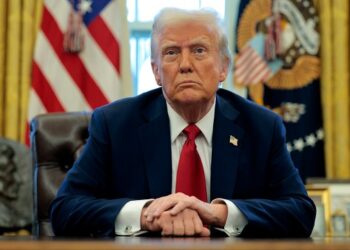
This past month, a Nigerian pastor publicly appealed to President Donald Trump regarding the targeted killings of Christians in Nigeria. Trump responded by designating Nigeria a “Country of Particular Concern,” calling the nation “disgraced,” and issuing a direct threat that the US stood “ready, willing, and able” to intervene, ordering the Pentagon to prepare for “possible action” and an eventual cut-off of aid.
Concurrently, deep factionalism within the People’s Democratic Party (PDP) led to significant internal crisis, including an attempt to deny the party chairman access to the National Secretariat. In a shocking statement reflecting the desperate state of Nigeria’s internal political stability, the factional chairman also reportedly appealed to Donald Trump to “come to the rescue of democracy” in the country.
When prominent religious and political figures resort to publicly inviting foreign powers to resolve domestic crises, they inadvertently legitimize the idea of unconstitutional change. Such appeals effectively communicate a total lack of faith in Nigerian institutions to address internal problems. It creates a climate where disgruntled elements within the security forces—already dealing with poor welfare, non-payment of benefits, and severe operational stress—could feel emboldened to take similar action, seeing themselves as the ultimate internal saviors of the state.
Against this turbulent regional backdrop, and in light of persistent, though officially denied, rumors of a coup plot within Nigeria in recent months, the government of President Bola Tinubu faces an unambiguous mandate: to do the needful to stabilize the polity and secure the nation’s democratic health.
Coups are fundamentally political symptoms of systemic crises. They thrive where economic hardship is acute, where insecurity is widespread and unchecked, and where political governance appears self-serving or manipulated (especially through controversial re-election attempts).
To stabilize his leadership, rebuild public trust, and decisively mitigate the conditions that enable coup rumblings, President Tinubu must immediately prioritize the following actions:
Visible Anti-Poverty Measures: Implement quick-impact social programs and subsidies that demonstrably ease the burden of inflation and currency devaluation on the average Nigerian household. Coup support often finds its base among a disenfranchised, economically desperate populace.
Fiscal Accountability: improve transparency regarding government spending and the management of recovered funds. Take visible and decisive action against corruption at high levels is paramount to restoring public faith and confidence at this critical moment.
Regional Insecurity Takedown: Move beyond tactical responses to launch a comprehensive, multi-state security strategy that visibly degrades the capacity of bandits, kidnappers, and non-state actors in the North and South East. The perception of a state unable to guarantee citizen safety is a primary destabilizing factor.
Military Welfare and Professionalism: Prioritize the immediate and regular payment of benefits, improved equipment, and welfare for security personnel. Recognition of falling heroes, extend scholarship to families of those who lost their lives saving the nation, consideration for those who have become disabled while at the forefront of fighting insurgency, ensuring a wonderful and appealing life assurance policy for security personnel etc. all these efforts is geared towards ensuring military satisfaction and professionalism and it minimizes internal dissent risks among the ranks.
Bipartisan Engagement: Initiate genuine, non-partisan dialogue with key opposition figures and regional leaders to foster a sense of shared responsibility for the nation’s challenges. A broad national consensus lessens the likelihood of political actors seeking alternative and unconstitutional avenues for change.
Publicly and genuinely support the independence of the judiciary and the electoral process will go a long way in further reestablishing confidence. Confidence in the ballot box is the ultimate firewall against military intervention.
Nigeria, as the economic and democratic heavyweight of West Africa, cannot afford to fall victim to the instability sweeping the region. By executing decisive, people-centred reforms in security, economy, and governance, President Tinubu can stabilize his mandate and hold Nigeria together as the continent’s most critical democracy.