

















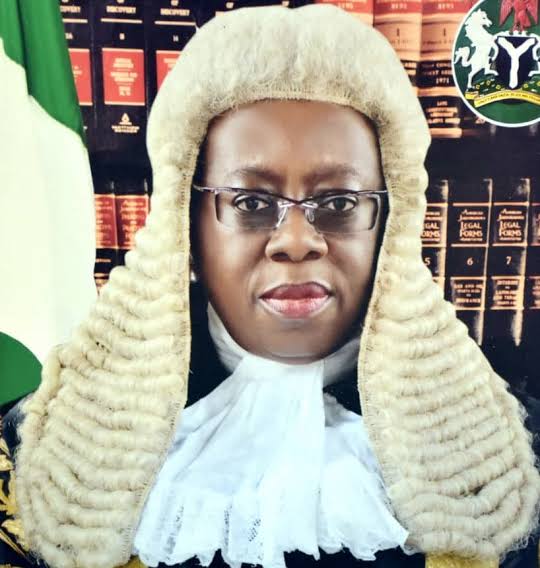
The Chief Justice of Nigeria, Justice Kudirat Kekere-Ekun, has called on court registrars across the country to embrace technology and judicial automation as a critical step towards improving efficiency, transparency and access to justice in Nigeria’s courts.

She made the call on Wednesday while delivering an address at the 2026 Strategic Retreat of the Committee of Chief Registrars of Nigeria, themed “Strengthening Court Administration, Financial Accountability, and Staff Wellbeing for a More Effective Judiciary in Nigeria.”
She said the judiciary was operating in an era defined by rising caseloads, evolving public expectations and rapid technological advancement, stressing that modern court administration must adapt to these realities.

“This retreat, is a forum to anticipate change, adapt strategically, and reinforce institutional resilience, particularly in an era defined by rising caseloads, evolving public expectations, and rapid technological advancements. In this context, I urge you to pay deliberate attention to the integration of technology and judicial automation. “Our courts are the heartbeat of the judicial system. Where administration is weak, justice is delayed. Where accountability is absent, public confidence erodes. Court administration, therefore, is not a peripheral function. It is governance in action,” the CJN stated.
Speaking earlier, the Attorney General of the Federation and Minister of Justice, Lateef Fagbemi, said the integration of digital technologies in court administration must be a primary objective for 2026.
“The Federal Ministry of Justice is championing initiatives like the Enterprise Content Management System and the Performance Management System. However, our efforts must be matched with our determination to implement faster solutions for e-filing, automated case management, and transparent court management,” he said. In his keynote address, the former Minister of Works and Housing, Babatunde Fashola, SAN, described the administration of justice as not just a service but a product, arguing for a system that allows court registrars to attend to non-contentious matters.
“One of the first things to ask… is can the registrars of court do more? Can they do more, and should they do more? In non-contentious matters, should judges be burdened? Should the chief registrar and other registrars of the court take responsibility? My argument, my opinion, is that that should be the case. And I think that the outcome of this retreat must point the way to achieving that, either by a legislative intervention, amendments that are possible, and proposals that can go to Parliament,” he said.
The CJN later declared the 2026 retreat open and wished the delegates successful deliberations.
The two-day retreat, organised by the Committee of Chief Registrars of Nigeria, is expected to produce policies and recommendations on court administration, staff welfare and wellbeing, and financial accountability.