
















Nigeria’s democracy has always been shaped by the strength—or weakness—of its electoral laws. Since the return to civilian rule in 1999, every election cycle has tested the resilience of the system, exposing loopholes and sparking calls for reform. The 2023 elections were no different.

While hailed as a milestone in some respects, they revealed deep flaws in the 2022 Electoral Act, particularly in areas of result transmission, dispute resolution, and enforcement of electoral offences. These shortcomings reignited demands for a stronger legal framework, leading to the drafting of the Electoral Act (Amendment) Bill, a piece of legislation now at the center of Nigeria’s political debate.
The Electoral Act is the primary law governing how elections are conducted in Nigeria. It sets the rules for casting and counting votes, outlines procedures for challenging results in court, and prescribes penalties for electoral offences.

The Amendment Bill, passed by the House of Representatives in December 2025, seeks to modernize this framework and fix weaknesses identified during the last election cycle. Among its most significant provisions is the explicit legal backing for electronic transmission of results.
This reform is widely seen as critical to reducing fraud, enhancing transparency, and restoring public confidence in the electoral process. The bill also introduces early voting procedures for security personnel and election officials, ensuring that those deployed on election day are not disenfranchised.
Stronger sanctions for electoral offences are included to deter malpractice, while adjustments to election calendars and dispute resolution mechanisms aim to ensure that legal challenges are resolved before inauguration, preventing governance paralysis.
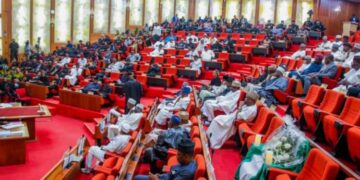
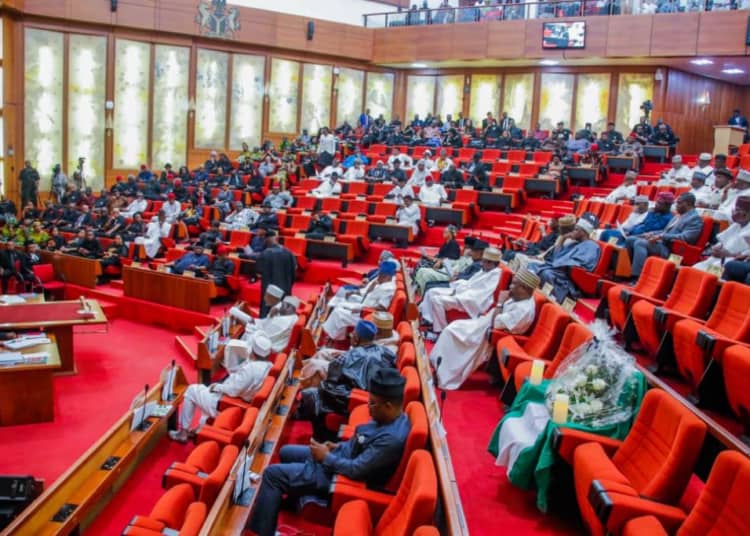
Despite the urgency of these reforms, the Senate has stalled. After taking the bill to second reading, it stepped it down and failed to complete deliberations before going on recess. This delay has created serious uncertainty.
The Independent National Electoral Commission (INEC) is required to issue a Notice of Election by February 2026, a deadline that leaves little room for legislative indecision. Without the amended law, INEC would be forced to plan the 2027 elections under the existing 2022 Act, compressing timelines for training, procurement, voter education, and technology deployment.
Legal ambiguity compounds the problem, as provisions like electronic transmission of results cannot be implemented without explicit legislative authority. Civil society groups warn that last-minute or incomplete frameworks make credible elections harder to achieve, breeding mistrust among voters and political parties.
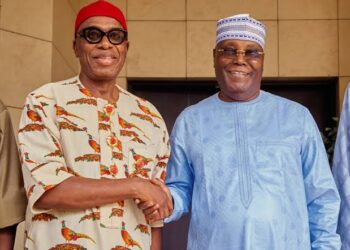
Opposition figures have been particularly vocal in their criticism. Former Vice-President Atiku Abubakar and other leaders accuse the Senate of deliberately stalling to preserve a law they believe favours the ruling party and undermines fair competition. They argue that the flaws exposed in the 2023 elections—ranging from manipulation of results to bottlenecks in legal challenges—could be repeated in 2027 if reforms are not enacted.
The National Civil Society Situation Room has echoed these concerns, describing the delay as poor legislative prioritization and warning that it risks eroding public trust in the democratic process. For many critics, the delay is not just careless; it is potentially intentional, designed to keep Nigeria’s electoral system stuck in an outdated framework that benefits those already in power.
The implications of this delay are far-reaching. Elections are not one-day events; they are complex processes requiring months of preparation.
Compressing this timetable by delaying the legal framework places Nigeria’s democracy under severe strain. INEC must train thousands of officials, procure sensitive materials, deploy technology, and educate millions of voters. Each of these tasks requires clarity in the law. Without it, the risk of errors, disputes, and mistrust increases dramatically.
In a country where electoral credibility has often been contested, the failure to enact timely reforms sends a troubling signal both to citizens and to the international community. It suggests that political expediency may be placed above transparency and fairness, a perception that can weaken democratic legitimacy.
The Electoral Act (Amendment) Bill represents an opportunity to strengthen Nigeria’s democracy by addressing the weaknesses of past elections.
Its provisions are designed to modernize the system, reduce fraud, and ensure that disputes are resolved swiftly and fairly. Yet, its delay threatens to squander that opportunity, leaving the country vulnerable to the same problems that have plagued its electoral process for years.
As the clock ticks toward INEC’s February deadline, the urgency of passing the amendment cannot be overstated.
Nigeria’s democratic future depends not only on the conduct of elections but on the credibility of the laws that govern them. Without decisive action, the nation risks entering the 2027 polls under a framework that is outdated, contested, and ill-equipped to deliver the transparency and fairness that democracy demands.
For comments, reflections, and further conversation, please email [email protected] or call +2348055847364.