
















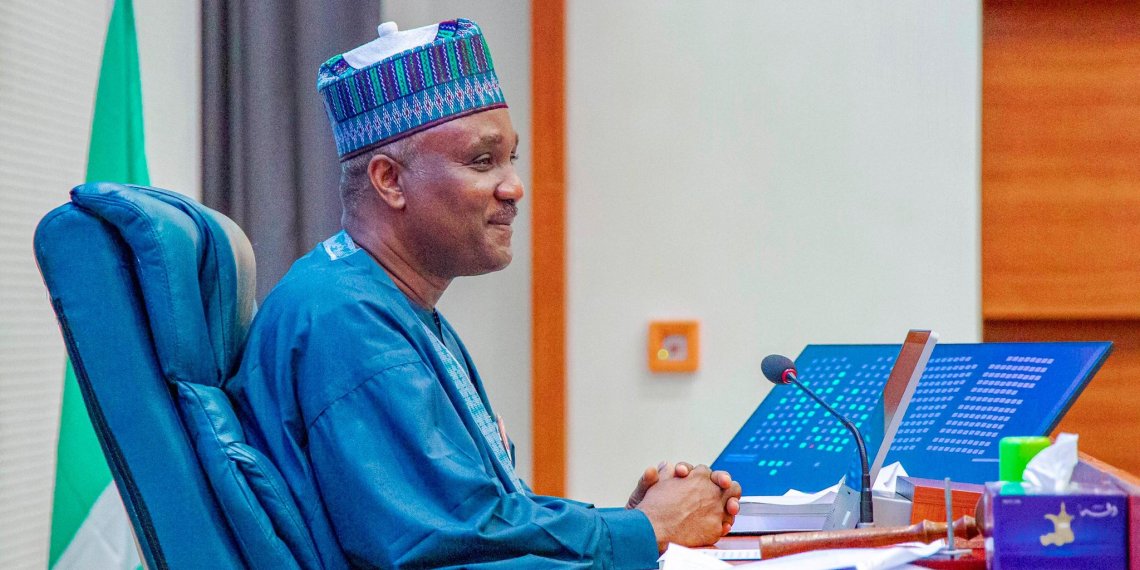

When Tajudeen Abbas emerged as Speaker of the House of Representatives, his election represented more than an internal parliamentary transition. It symbolised the arrival of a lawmaker widely regarded as experienced, methodical, and temperamentally suited for consensus-driven leadership at a time Nigeria urgently needed institutional calm.
Nearly two years into the life of the 10th National Assembly, Abbas’s stewardship offers an instructive case study in legislative management, political balancing, and the often-overlooked relationship between national leadership and constituency accountability.
A Legislature Under Pressure
Nigeria’s current democratic phase is unfolding amid economic reforms, fiscal adjustments, security challenges, and heightened public expectations. In such a climate, the legislature’s role becomes particularly delicate — tasked with lawmaking, oversight, and representation while navigating political sensitivities.
Under Abbas’s leadership, the House has recorded notable legislative momentum. Bills addressing fiscal reforms, educational financing, tax restructuring, public sector efficiency, and security matters have moved through parliamentary processes with relative speed. While legislative productivity should not be measured solely by numbers, the pace signals a chamber actively engaged with governance realities.
Observers of the House note that Abbas has prioritised procedural discipline and internal coordination. Committee engagements, plenary debates, and legislative consultations have proceeded with reduced turbulence compared to the disruptive tensions that characterised previous assemblies.
Leadership by Consultation
Perhaps Abbas’s most defining attribute has been his leadership style. Rather than adopting confrontational theatrics, he has leaned toward dialogue, negotiation, and coalition-building — traits critical in a diverse legislature representing Nigeria’s complex political landscape.
This approach has helped maintain working relationships across party lines and regional blocs, reinforcing the House’s institutional stability. In a political environment where discord often overshadows deliberation, such moderation has been both strategic and necessary.
Importantly, Abbas’s style reflects a recognition that effective legislative leadership in Nigeria requires more persuasion than proclamation. Authority, in this context, is exercised through inclusion rather than imposition.
Reopening Constitutional Conversations
The 10th House under Abbas has also engaged foundational debates about Nigeria’s governance structure. Constitutional amendment proposals touching on devolution of powers, electoral reforms, and broader inclusivity have resurfaced.
Discussions around gender representation, institutional strengthening, and democratic participation indicate a legislature willing to interrogate structural questions. Whether these initiatives ultimately crystallise into law or remain part of evolving discourse, their presence reflects legislative vitality.
Economic and Social Interventions
On economic matters, Abbas has contributed to debates surrounding Nigeria’s fiscal direction. His cautionary remarks on rising public debt, alongside legislative backing for revenue reforms, demonstrate awareness of the country’s fragile economic equilibrium.
Socially, the House has supported measures tied to education funding, youth engagement, healthcare considerations, and wage policies. These legislative choices, though sometimes controversial, illustrate attempts to balance reform imperatives with social realities.
Beyond Abuja: Constituency Commitments in Zaria
Yet national leadership, however visible, is only one dimension of Abbas’s political footprint. Equally significant is his continued engagement with his constituency in Zaria, where his grassroots interventions reveal the localised impact of legislative representation.
Over successive terms in the House, Abbas has been associated with projects aimed at addressing critical community needs. These include:
Educational support initiatives, ranging from classroom renovations to the provision of learning materials in public schools.
Scholarship and student assistance programmes, offering financial relief to indigent students across tertiary and secondary levels.
Healthcare outreach efforts, including medical missions, distribution of essential drugs, and support for local health centres.
Infrastructure improvements, particularly small-scale road rehabilitation and community development projects.
Youth and women empowerment schemes, providing vocational tools, training opportunities, and entrepreneurial support.
Such constituency interventions, though less publicised than national debates, often carry profound significance for beneficiaries. In communities where government presence is frequently uneven, targeted projects can alter educational outcomes, health access, and economic prospects.
For many residents of Zaria, Abbas’s visibility at the national level has not translated into detachment from local obligations. Instead, his constituency engagements suggest continuity between representation and responsibility.
Balancing Expectations and Criticism
No leadership tenure unfolds without scrutiny. Questions surrounding legislative expenditures, public perceptions of parliament, and governance priorities remain valid features of Nigeria’s democratic conversation.
Critics argue that the National Assembly must continually justify its relevance through transparency and measurable public value. Supporters counter that legislative effectiveness should be judged by stability, lawmaking quality, and institutional maturity.
Within this debate, Abbas’s tenure presents a nuanced picture: a House functioning with relative coherence, delivering legislative output, while navigating public scepticism about governance institutions.
Symbolism and Regional Resonance
For Northern Nigeria, Abbas’s rise carries symbolic weight. A lawmaker from Zaria ascending to one of the country’s most consequential legislative offices reinforces narratives of experience, patience, and technocratic competence.
Yet beyond symbolism lies substance. His tenure underscores a broader lesson: that steady leadership, often understated, can stabilise institutions in times of uncertainty.
A Leadership Still Unfolding
As the 10th Assembly progresses, Abbas’s legacy remains in formation. Legislative outcomes, constitutional reforms, and governance oversight will ultimately define historical judgment.
For now, however, Tajudeen Abbas represents a model of measured parliamentary leadership — one that combines national legislative responsibilities with constituency engagement, calm authority with procedural focus, and political navigation with institutional stability.
In Nigeria’s evolving democratic story, such leadership may prove more consequential than it first appears.