












By Bashir Bello

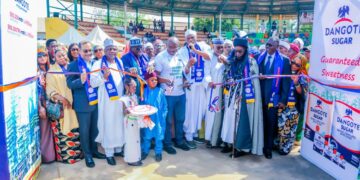
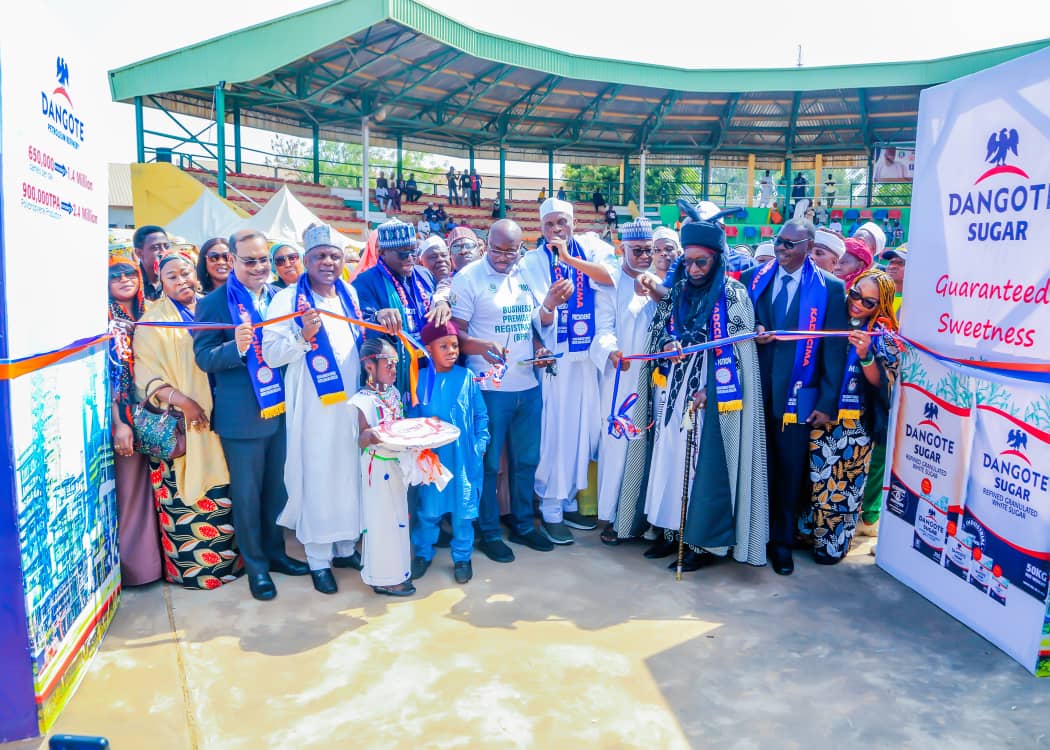
The 47th Kaduna International Trade Fair opened today with a powerful chorus from government, industry, and commerce leaders, all urging that Nigeria’s ongoing reforms be translated into tangible economic gains through sustained local‑content development.
Representing Kaduna State Governor Senator Uba Sani at the event, the Honourable Commissioner for Business, Innovation and Technology, Mrs. Patience Fakai, welcomed delegates and stressed that “reforms alone are not enough; delivery matters.”

She described the fair as a flagship platform that has long symbolised enterprise, resilience, and opportunity for Kaduna and Nigeria. She invited local and international guests to experience a state that is fast becoming a preferred destination for business, innovation, and industrial growth.
The theme for this year, “From Reforms to Results: Economic Transformation Through Sustained Local Content Development,” was described as both timely and strategic. Fakai emphasised that reforms must translate into real jobs, revived industries, scaled innovations, and shared prosperity.
She outlined how Kaduna’s government has embraced difficult but necessary reforms, building a business‑friendly environment through regulatory and institutional changes that reduce the cost of doing business. Strategic investments in industrial clusters, innovation hubs, and support for MSMEs, startups, and tech‑driven enterprises are already taking shape, all anchored by local‑content policies that prioritise Kaduna‑based skills, materials, and solutions.
Innovation, she said, remains the catalyst for inclusive growth. The Ministry of Business, Innovation and Technology is ensuring that young people, women, and small businesses are not spectators but active participants in the state’s economic transformation, turning natural and human resources into value‑added products.
A flagship achievement highlighted was the establishment of the Kaduna State Institute for Vocational Training and Skills Development, a world‑class skills institute with campuses in each of the three senatorial districts. The institute aims to build a human‑resource base that fuels local‑content stimulation and guarantees that every part of the state benefits from the growth agenda.
Fakai reaffirmed Kaduna’s commitment to work hand‑in‑hand with the private sector, chambers of commerce, development partners, and the Federal Government. She described the Trade Fair as a critical marketplace for ideas, investments, and partnerships, showcasing Nigerian ingenuity, facilitating B2B and B2G engagement, and attracting capital to priority sectors such as agro‑processing, manufacturing, ICT, and creative industries.
As the fair officially commenced, she called on all participants to move beyond talk to real collaborations and to turn reforms into tangible results. “Let this Fair strengthen our resolve to build an economy where local content thrives, innovation flourishes, and growth delivers real value to our people,” she concluded, wishing exhibitors and participants a successful and rewarding event.
The lawmaker representing Igabi Federal Constituency, where the fair is located, Hon. Hussaini Jalo, said the Kaduna International Trade Fair is one of the largest in Nigeria, competing with the Lagos International Trade Fair. With its rich history, it has evolved into a hub for trading. He noted that Kaduna’s rich mineral resources present important opportunities for investors.
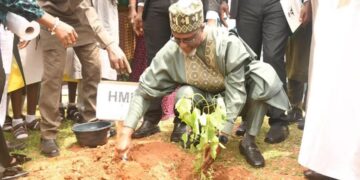
He proposed the establishment of a chamber for miners and pledged to provide solar‑powered boreholes and solar street lights since the fair is located in his constituency.
Permanent Secretary of the Federal Ministry of Industry, Trade and Investment, Amb. Nura Abba Rimi, echoed the theme, noting that the Nigeria Trade Policy 2023‑2027 is now moving from design to execution. “Local content is no longer just about oil; it’s central to industrial growth, creating jobs, and keeping wealth within Nigeria,” he said, pointing to digital platforms that link major investors with local suppliers.
NACCIMA’s National President, Engr. (Dr.) Jani Ibrahim, praised Kaduna’s “visionary leadership” and the state’s 2026 Appropriation Bill, which earmarks ₦100 million each for health, education, agriculture, and social projects. He called on all levels of government to work closely with chambers of commerce to nurture a private‑sector‑driven economy.
KADCCIMA President Alhaji Farouk Suleiman delivered a welcome address that framed the fair as more than a one‑week event. He announced a “turnaround agenda” to transform the Trade Fair Complex into a year‑round hub for exhibitions, SME incubation, and skills development, with a focus on youth and women. “When you train one youth, you reduce unemployment; when you empower one woman, you uplift an entire household,” he said.
The fair, themed “From Reforms to Results: Economic Transformation Through Sustained Local Content Development,” will feature business‑to‑business and business‑to‑government matchmaking, showcase agro‑processing, manufacturing, ICT, and creative industries, and attract over 10,000 participants. It is positioned as a catalyst for import substitution, value‑added production, and stronger private‑sector growth.
As the ceremony concluded, all speakers called on participants to move “beyond conversations to collaborations, beyond reforms to results,” promising that Kaduna will become a model of local‑content‑driven prosperity for Nigeria.