Nigeria unveils Community-Led Strategy to Protect Gas Assets and Pipeline Sabotage

By Bashir Bello

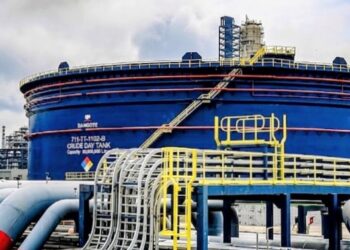
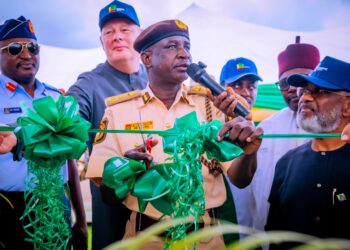
The strategy, unveiled during a high-level oil and gas security meeting in Port Harcourt attended by the Minister of Defence General Christopher Musa, top military commanders, security chiefs, executives of international and indigenous oil companies, traditional rulers and community leaders, marks a shift from reliance on kinetic security operations to a broader partnership-driven approach aimed at guaranteeing uninterrupted gasproduction.

Presenting the framework on behalf of the Office of the National Security Adviser (ONSA), the Special Adviser to the National Security Adviser on Niger Delta and Energy Security, Grace Ihuoma Osaretin, said the country’s energy security could only be sustained through coordinated action involving government, security agencies, operators and host communities.

“We are gathered today to review the operational realities of our critical gas transmission lines. This briefing focuses on our progress, our current operational bottlenecks and the strategic interventions required to strengthen production assurance,” she said.

According to Osaretin, closer collaboration between frontline military formations, the Working Committee on Gas and the deployment of non-kinetic security measures has significantly curtailed attacks on critical infrastructure.

“Honourable Minister, Sir, we are making significant progress in mitigating infrastructure sabotage through closer synergy with frontline commands, the Working Committee on Gas and the implementation of new non-kinetic security strategies. As a result, we have recorded an 80 to 90 per cent reduction in downtime along vulnerable segments, particularly the GTS 4 Line,” she disclosed.

The improvement, she noted, has enabled operators to sustain gas throughput across the Gas Transmission System (GTS), reducing production interruptions that have long undermined Nigeria’s energy output and revenue generation.

She attributed the gains to coordinated operations involving the Working Committee on Gas, the Joint Inter-Agency Response Framework, Operation Delta Safe (OPDS), other security agencies and production teams of the oil companies.
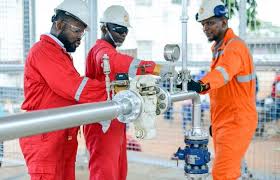
“Thanks to improved pipeline availability, the Working Committee on Gas, the Joint Inter-Agency Response Framework, Operation Delta Safe, other relevant security agencies and the IOC production teams have been able to sustain throughput across the GTS network,” she said.

She, however, cautioned that despite the progress, vandalism and deliberate attacks on oil and gas infrastructure continue to impose heavy financial and operational burdens on operators.

“Companies continue to expend more resources than necessary due to persistent vandalism and infrastructure compromise,” she said, noting that repeated breaches of critical facilities continue to affect operational efficiency and investor confidence.

She said the Federal Government was therefore adopting a proactive framework that seeks to prevent disruptions before they occur rather than merely responding after attacks.

“Our objective today is to transition from reactive measures to a cohesive, proactive strategy. We are not merely holding a dialogue; we are establishing a fortified public-private partnership,” she stated.

According to her, the new approach is the new approach is expected to strengthen joint operational capacity, improve intelligence sharing and streamline practical initiatives that will guarantee production assurance across Nigeria’s gas infrastructure.

Osaretin stressed that while government would continue to provide the security architecture necessary for oil and gas operations, long-term protection of critical national assets would depend largely on stronger relationships between operators and their host communities.
We recognize that the Government cannot secure these assets in isolation,” she said.

“Under the security architecture led by the Honourable Minister of Defence, supported by the Armed Forces, Operation Delta Safe and other relevant security agencies, the Government remains committed to providing the security umbrella required for oil and gas companies to operate optimally.”

The Port Harcourt meeting also highlighted increasing collaboration among the Ministry of Defence, the Armed Forces, security agencies and the oil and gas industry in protecting strategic national assets amid growing concerns over threats to energy infrastructure.The Port Harcourt meeting also highlighted increasing collaboration among the Ministry of Defence, the Armed Forces, security agencies and the oil and gas industry in protecting strategic national assets amid growing concerns over threats to energy infrastructure.

Osaretin maintained that technology, policy reforms and security hardware alone would not guarantee lasting success without sustained cooperation among all stakeholders.

Read Also


Related Posts

Next Post

Leave a Reply

Your email address will not be published. Required fields are marked *

Recent News

Welcome Back!

Login to your account below

Retrieve your password

Please enter your username or email address to reset your password.