














Nigeria’s political journey increasingly feels like a failed experiment—one where every option tested ends in the same frustration. We have tried the old guard. We have tried the so-called young and vibrant. Yet, the outcome remains largely unchanged: poor governance, weak institutions, and a population that continues to lose faith in leadership. The question is simple—what exactly is the problem, and where do we go from here?

At one point, Nigerians believed experience was the missing ingredient. The thinking was that older politicians, having seen it all, would govern with wisdom and restraint. This belief paved the way for leaders like Olusegun Obasanjo and Muhammadu Buhari to return to power as elected presidents after earlier stints as military heads of state.
The logic seemed sound. These were men who had reached the peak of power before and lost it. One had even tasted imprisonment; the other was removed through a palace coup. Nigerians assumed they had nothing left to prove or gain materially. Perhaps they would govern with a sense of legacy, correct past mistakes, and lead the country toward stability and growth.

That hope did not materialize. Instead, many Nigerians argue that conditions worsened—economically, socially, and in terms of national cohesion. The experiment with “experienced hands” failed to deliver the expected transformation.
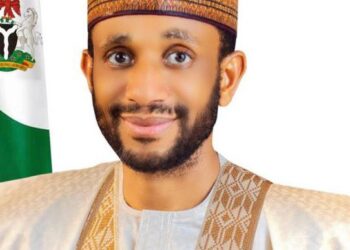
Then came the shift toward “new blood.” Nigerians turned to younger politicians, hoping for energy, innovation, and a break from the past. Leaders like Abba Kabir Yusuf emerged with strong grassroots backing. Yet, critics argue that his administration has struggled to assert independence, often seen as operating under the shadow of Rabiu Musa Kwankwaso.
Similarly, Dikko Umar Radda, a relatively young and academically accomplished leader, came into office with high expectations. Many believed his background and energy would translate into bold reforms. So far, however, the impact has not matched the optimism.
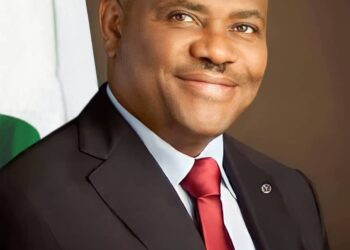
This pattern is not isolated. Across the country, younger leaders such as Babajide Sanwo-Olu, Seyi Makinde, and Umar Bago have shown pockets of progress, but none have fundamentally broken away from the entrenched system. Others have simply blended into the old order, continuing the same governance style they once criticized.
The uncomfortable truth is this: Nigeria’s problem is not strictly about age. It is about a political culture that reproduces itself regardless of who is in charge.
Young politicians are not emerging in isolation. They are groomed, funded, and positioned by the same old political elite. By the time they assume office, many have already internalized the very habits Nigerians want to escape—patronage, weak accountability, and governance driven by survival rather than service. What began as bad practice has now solidified into a political culture. And culture is far more difficult to change than leadership.
But there is an even harsher reality—one that is often ignored in polite conversations. How do you expect a hungry population to fight for accountability?
Today, millions of Nigerians are not just poor—they are exhausted. In as much as we can feel the effects, we all know the cause. When basic survival becomes a daily struggle, civic responsibility becomes a luxury. A citizen who cannot afford a decent meal cannot be expected to consistently engage in political resistance. Hunger weakens not just the body, but the will.
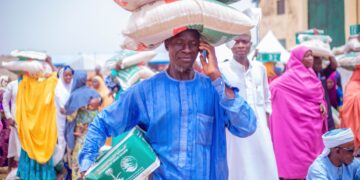
This is where the political class has mastered the system. Poverty is no longer just an economic condition—it has become a political tool. When people are pushed to the brink, they become vulnerable to the smallest inducements. Votes are traded for food items, sometimes as little as a pack of instant noodles. Not because people do not understand the consequences, but because immediate survival outweighs long-term governance. This is not ignorance. It is desperation.
Nigerians must confront an uncomfortable truth: the system thrives not just because of bad leaders, but because conditions make it easy for bad leadership to persist. Leaders do not emerge from a vacuum. They are a reflection of the society that produces and tolerates them.
Finally, Nigeria’s political experiment is not beyond repair—but it cannot be fixed with slogans or blind hope. It requires structural change, economic relief, and a population that, even in hardship, begins—step by step—to resist being reduced to survival alone.
Until then, whether old or young, the faces may change—but the story will remain the same.