








By Bashir Bello, Abuja
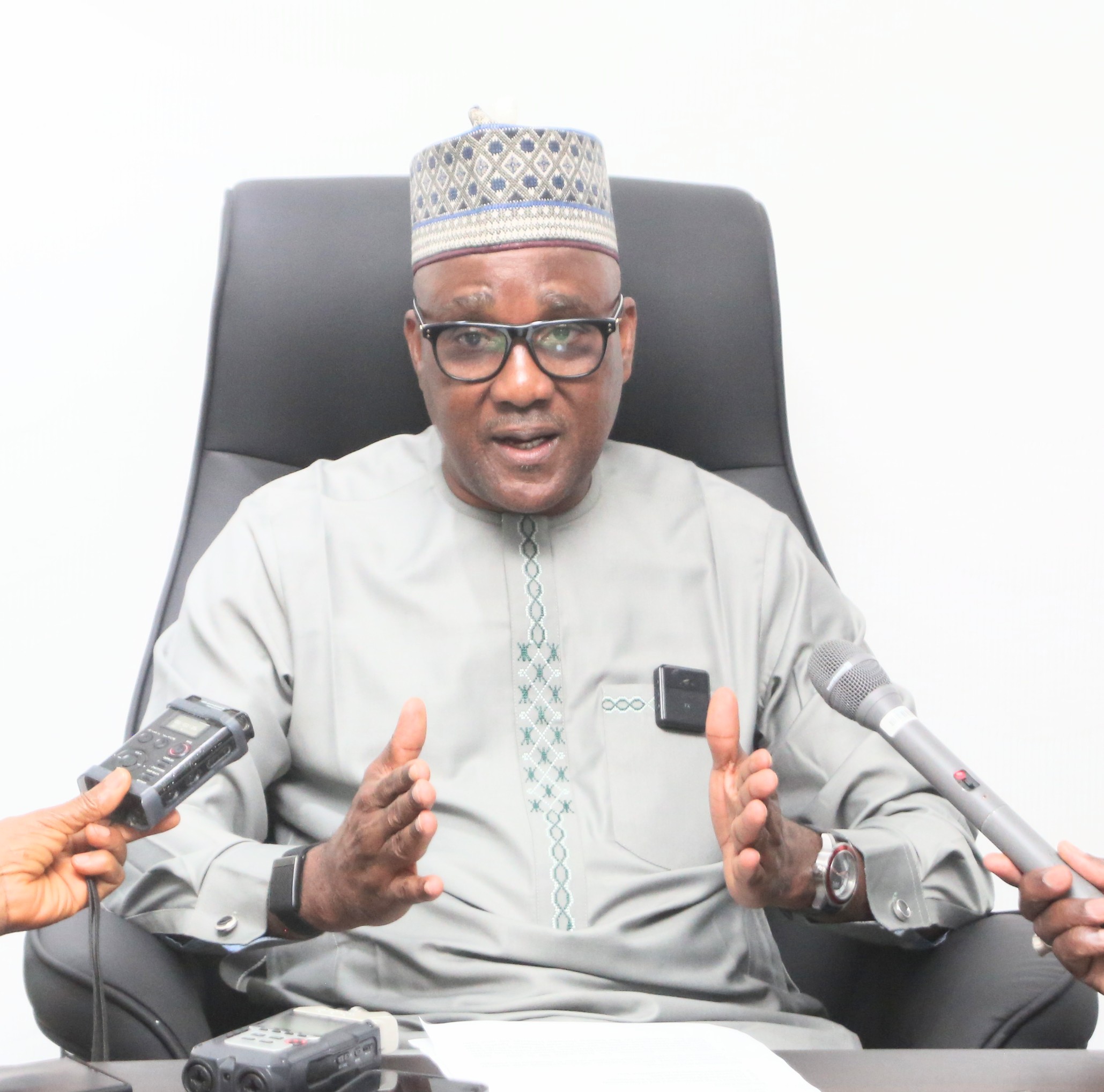
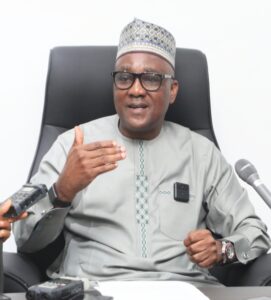
In this exclusive interview with selected journalists, the Speaker of the House of Representatives, Rt. Hon. Tajudeen Abbas, reflects on the performance of Nigeria’s 10th National Assembly, highlighting what he describes as its commitment to transparency, legislative reforms and citizen engagement.

Question
Mr. Speaker, this is the third time you are hosting this engagement with journalists and stakeholders. Many Nigerians are asking why you continue to organise these sessions. What is the main objective?
Speaker Abbas
First, I thank Almighty Allah for His mercy and guidance. Since I became Speaker, I made a commitment that the House of Representatives would operate with greater openness and transparency.
One lesson we learnt from previous Assemblies was that many Nigerians were unaware of what the National Assembly was doing because our activities were not adequately communicated.
That is why the 10th Assembly decided to open its doors to Nigerians. We want citizens not only to know what we are doing but also to participate by offering suggestions, identifying areas that require improvement and helping us strengthen our legislative work.
During our recent Open Week, we spent several days reviewing our activities, policies and legislative achievements. We invited youths, women groups, traditional rulers, civil society organisations and citizens from across the country to interact directly with lawmakers. The engagement was successful and provided valuable feedback for the House.
Question
Do you compile recommendations from these engagements and use them in your legislative work?
Speaker Abbas
Absolutely.
The purpose is not simply to showcase what we have done but to allow Nigerians to assess our performance.
We present our legislative activities, oversight functions and constituency engagements, then invite constructive criticism and recommendations.
Their observations help us improve our work and shape future legislative priorities.
Question
What would you describe as the biggest achievements of the 10th National Assembly?
Speaker Abbas
The 10th Assembly has recorded one of the highest legislative outputs in Nigeria’s democratic history.
We have processed and passed more bills than previous Assemblies, and President Bola Ahmed Tinubu has assented to a record number of them.
Among the landmark achievements is the Student Loan Scheme, which has enabled over one million Nigerian students to access higher education without being denied opportunities because of financial challenges.
Another significant milestone is the Tax Reform initiative.
Nigeria cannot continue depending almost entirely on oil revenue. Tax reform is designed to expand government revenue, improve public finances and enable greater investment in roads, schools, hospitals and other infrastructure.
The reforms began implementation this year, and we expect their long-term impact to become increasingly evident over the coming years.
Question
The National Assembly also introduced Regional Development Commissions. Why were they considered necessary?
Speaker Abbas
The Regional Development Commissions are intended to accelerate development across the country’s geopolitical regions.
Each region has unique developmental challenges. These commissions will enable regional priorities to receive focused attention while complementing the efforts of the Federal Government.
We believe they will play a significant role in national development.
Question
Security dominated discussions during the National Assembly Open Week. What were the major outcomes?
Speaker Abbas
Security remains one of Nigeria’s greatest challenges.
That is why we invited heads of security agencies, Governor Uba Sani of Kaduna State, the Emir of Zaria and former Chief of Defence Staff, General Lucky Irabor, among other stakeholders.
Following extensive discussions, we produced a communiqué containing recommendations on improving Nigeria’s security architecture.
We also examined the proposed State Police Bill and received useful recommendations from participants.
Question
Many Nigerians are concerned that State Police could be abused by state governors. What safeguards are being proposed?
Speaker Abbas
That concern has been carefully considered.
The proposed legislation contains checks and balances to prevent abuse.
Governors will not have unrestricted powers over state police structures.
We are also encouraging journalists and other stakeholders to study the Bill and submit recommendations before its final passage.
Question
Your Assembly is proposing additional legislative seats for women. What informed this decision?
Speaker Abbas
Women’s representation in Nigeria remains far below acceptable democratic standards.
Our proposal seeks to introduce reserved seats for women through an Electoral College system while maintaining the existing 360 House of Representatives constituencies.
Each state would have one additional seat reserved exclusively for women.
Similarly, twelve additional Senate seats are proposed, with two allocated to each geopolitical zone on a rotational basis.
These measures are intended as temporary interventions over sixteen years until women can compete more equitably under existing electoral arrangements.
Question
You are enjoying a cordial working relationship with your colleagues devoid of rancour, what is the secret?
Speaker Abbas
Laughs… I think this question should be directed at my colleagues. They are in the best position to answer it. However, whatever leadership position you find yourself in, ensure accountability, transparency, fairness, equity and justice for all. If you can do that, then there will be peace.
That is exactly what we are doing as leaders of the Green Chamber. We ensure that everyone’s opinion counts because we are representing Nigeria.
Question
Some Nigerians describe the 10th National Assembly as a rubber stamp for the Executive. How do you respond?
Speaker Abbas
I disagree completely.
The National Assembly supports policies that we believe benefit Nigerians.
Where the Executive proposes reforms that align with national development, it is our constitutional responsibility to consider and approve them after due scrutiny.
Constructive cooperation between the Executive and Legislature should not be mistaken for weakness.
Around the world, successful democracies function through collaboration between both arms of government.
Our responsibility is to serve Nigerians, not to oppose government policies simply for political reasons.
The true measure should be whether legislation benefits the people.
I have been in the National Assembly for sixteen years. We never got a raise on constituency project funds until the 9th Assembly when it was increased by one hundred million Naira (N100,000,000). But in this dispensation, the 10th Assembly, His Excellency President Bola Tinubu approved a raise to one billion Naira (N1,000,000,000) per constituency for the benefit of Nigerians. Isn’t that what good governance is all about?
We as lawmakers should not be confrontational with the executive, especially when both sides are from the same political party. What is needed is a peaceful atmosphere and synergy between the executive and legislative arms for the betterment of the nation.
Closing Remarks
Speaker Abbas reaffirmed that the 10th National Assembly remains committed to transparency, inclusive governance and reforms aimed at strengthening Nigeria’s democratic institutions.