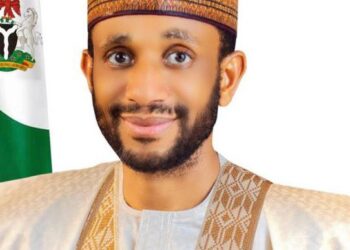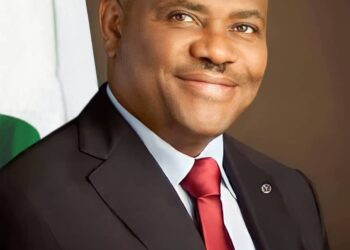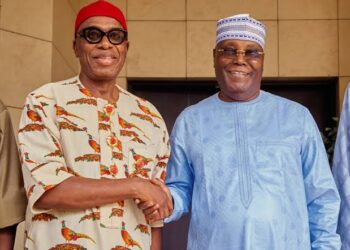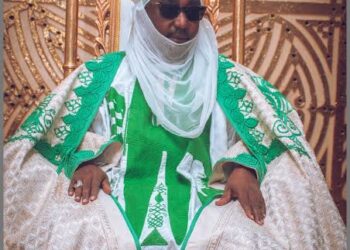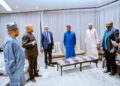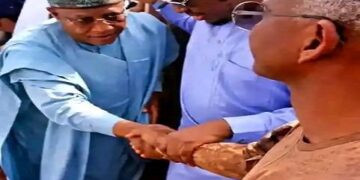











The burial of Hajiya Umma El-Rufai, mother of former Kaduna State Governor Nasir El-Rufai, was meant to be a solemn occasion of mourning. Instead, it became the stage for one of the most talked-about political gestures in recent Nigerian history. At the National Mosque in Abuja, former Communications Minister Isa Ali Pantami sought to reconcile El-Rufai with his successor, Governor Uba Sani. The handshake that followed has since sparked debate: was it a genuine act of reconciliation, or simply a strained gesture forced upon a grieving son?

The background to this moment is deeply political. The Kaduna State House of Assembly had accused El-Rufai’s administration of mismanaging ₦432 billion, findings that reportedly triggered the Independent Corrupt Practices and Other Related Offences Commission (ICPC) to detain him for questioning. His detention coincided with his mother’s illness, and many believe the stress of her son’s troubles worsened her condition. El-Rufai was said to have been unable to see her before she passed away, adding a layer of personal grief to his political ordeal.
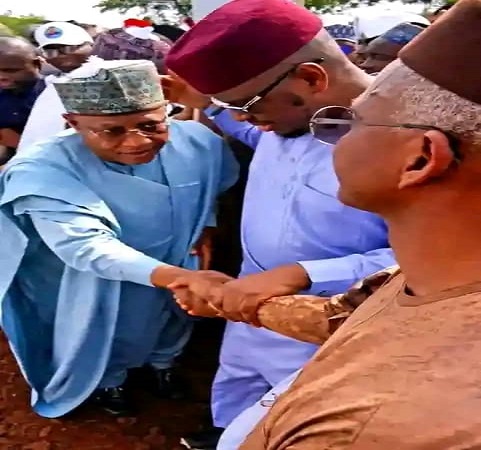
It was in this atmosphere of pain and tension that Pantami attempted to bring the two leaders together. Governor Uba Sani extended his hand in what seemed like a gesture of peace. El-Rufai, however, hesitated. He eventually shook hands, but his body language—stiff posture, lack of eye contact, and reluctance—spoke volumes. Witnesses noted that the handshake appeared symbolic rather than genuine, more about optics than reconciliation.

Yet, while many criticized the timing, others saw the gesture as a necessary first step. Reconciliation, they argue, often begins with small symbolic acts, even if imperfect. Governor Sani’s willingness to extend his hand in public, despite the tension, was interpreted by some as a sign of maturity and a desire to move forward. El-Rufai’s reluctant acceptance, though lacking warmth, could also be seen as an acknowledgment that dialogue is inevitable, even if painful.
Critics, however, questioned why reconciliation was attempted during mourning. Forcing such a gesture at the burial of El-Rufai’s mother appeared insensitive, even opportunistic. If genuine peace was the goal, respected clerics and mediators could have convened both men earlier, in a neutral setting, away from the emotionally charged atmosphere of a graveside. Instead, the handshake highlighted the depth of mistrust.
The strained handshake has become emblematic of Kaduna’s fractured political landscape. While Governor Sani’s attempt to extend an olive branch was overshadowed by El-Rufai’s reluctance, the symbolism of the moment was clear: bitterness remains, but the door to reconciliation has not been completely shut. For many observers, the handshake was not the end of the feud, but perhaps the beginning of a long and difficult process of healing.
The implications for Kaduna are profound. The feud threatens to overshadow governance, with political energy consumed by rivalry rather than development. Citizens are watching closely, and public distrust is growing as leaders appear more focused on personal battles than collective progress. Unless properly mediated, the conflict could intensify ahead of the 2027 elections, destabilizing the state’s political terrain and deepening divisions among supporters.
Peace in Kaduna is desirable, but it must be genuine. The burial of Hajiya Umma El-Rufai was not the right moment to force reconciliation, yet it may have opened a window for dialogue. The reluctant handshake symbolized unresolved bitterness, but it also showed that both men, however grudgingly, were willing to acknowledge each other. True reconciliation will require deliberate dialogue, respect for emotions, and involvement of figures both men hold in high regard—not hurried gestures at a graveside.
This episode serves as a reminder that political reconciliation, especially between leaders of such influence, cannot be staged or forced. It must be carefully planned, rooted in sincerity, and respectful of personal grief. Otherwise, it risks becoming a spectacle that exposes division rather than mends it. But if the handshake, however reluctant, is treated as a first step, then perhaps Kaduna can begin to heal from its political wounds.
For comments, reflections and further conversation, email: [email protected] | Phone: +2348055847364